




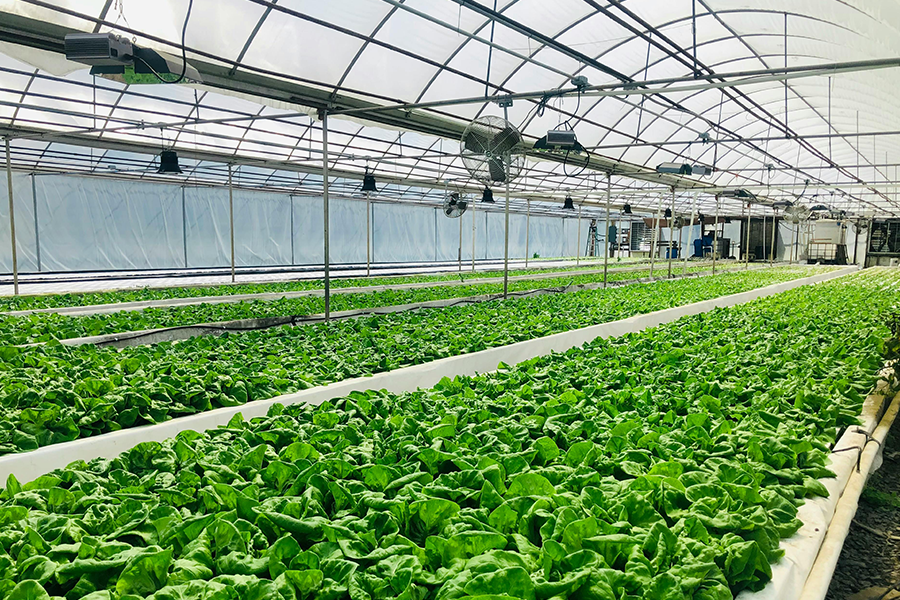

Greenhouse Centrifugal Humidifiers: How to Choose the Right Atomizer for Summer Cooling
Publish Time:2026-10-10 13:11:59 Author:Jucheng Views:186
Humidity is one of the most overlooked — and most consequential — variables in a protected-crop greenhouse. Too dry and your crops transpire under stress, lose turgor, and are exposed to blossom-end rot; too wet and you invite botrytis, powdery mildew, and a cascade of fungal problems. Commercial growers need a humidification and cooling system that is reliable, cheap to run, and low on maintenance.
Centrifugal humidifiers — also called centrifugal atomizers — are among the most cost-effective humidification and summer-cooling technologies used in European, North American, and Middle Eastern greenhouses. Unlike high-pressure fine-mist systems that need a 70–100 bar pump, and unlike ultrasonic units that demand demineralized water, a centrifugal atomizer simply spins water against a perforated disc to produce a fine, fast-evaporating fog. There is no ultrasonic transducer to scale, and no high-pressure line to burst.
This guide explains what a greenhouse centrifugal humidifier is, how the centrifugal atomizer is built, typical performance numbers, where it is applied, how it compares with fan-and-pad, ultrasonic, and high-pressure misting systems, and a practical procurement checklist for buyers specifying the system for the first time.
1. What Is a Greenhouse Centrifugal Humidifier?
A greenhouse centrifugal humidifier is a compact device that uses a high-speed rotor to break water into fine droplets (typically 10–50 µm) that evaporate directly into the greenhouse air, raising relative humidity and removing heat through latent evaporation. The core components are:
Water supply inlet — a gravity or low-pressure feed (usually < 1 bar) that delivers water to the center of the rotor.
Motor + rotor disc — a brushless or AC motor spins the perforated disc at roughly 2,000–6,000 rpm, flinging a thin film of water out through the holes.
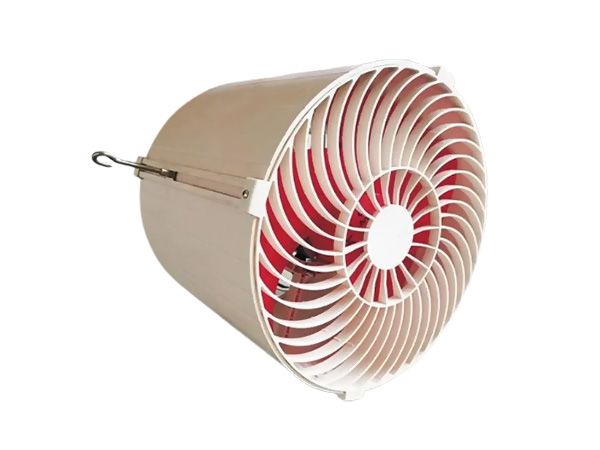
Protective cover / top grille — a perforated shroud that keeps dust, insects, and debris off the rotor and shapes the mist column. The centrifugal humidifier uses a top-grille design so the fog rises and distributes across the crown of the house.
Mounting bracket — a galvanized steel or plastic bracket that clamps the unit to the gutter line, cross-beam, or eave.
Units are typically ceiling-mounted at intervals along the span, with multiple units per house. Because the whole system runs at low pressure, it can be fed from a simple header pipe or even individual drip lines — no dedicated high-pressure loop required.
2. Why Humidity Control Matters in a Greenhouse
Relative humidity (RH) and vapor pressure deficit (VPD) are the two numbers growers should monitor. Most vegetable and ornamental crops sit comfortably at 60–85% RH in the vegetative phase, with a target VPD of roughly 0.8–1.2 kPa. Deviate too far in either direction and you pay for it:
Too dry (low RH, high VPD): accelerated transpiration, leaf scorch, blossom-end rot in tomatoes, and reduced yield.
Too wet (high RH): botrytis cinerea, powdery mildew, downy mildew, and poor fruit set.
In summer, the same system does double duty as an evaporative cooler: the latent heat absorbed when water vaporizes pulls down air and leaf temperature without adding any refrigerant. That makes centrifugal humidifiers one of the cheapest ways to keep a polytunnel or arched house in a workable thermal range during heat waves — far cheaper than a closed-circuit chiller, and far simpler than a wet-curtain fan bank.
3. Core Advantages of the centrifugal humidifier Top-Grille Atomizer
The centrifugal humidifier is a centrifugal atomizer designed specifically for protected-crop houses. Its defining features, and why they matter in practice:
Top-grille cover. The perforated top grille shields the rotor from dust and insects, keeps the mist directed upward for even distribution across the crown, and reduces wetting of the floor and lower canopy — which matters when you are running the unit only for humidity, not for cooling.
Centrifugal atomization, no high pressure. Because the rotor does the atomizing, the system runs on low pressure. No 70–100 bar pump, no high-pressure line, no expensive pressure-regulated nozzle that clogs every two weeks.
No ultrasonic transducer. Ultrasonic units need demineralized water or you will scale the plate in weeks. The centrifugal humidifier works with treated municipal water and a simple 100-mesh inlet filter.
Fine, fast-evaporating droplets. A 10–50 µm droplet evaporates almost on contact with air, so the unit raises RH without drenching the leaf surface — which is exactly what you want when the goal is humidity, not irrigation.
Easy service. The rotor and grille come off in under 10 minutes with one tool. Descaling is a 30-second soak in a mild acid solution.
Low power draw. Each unit typically draws 20–60 W, so a full house of 8–12 units adds only a few hundred watts to the greenhouse load.
4. How Centrifugal Atomization Actually Works
Water enters the center of the rotor disc by gravity and is flung outward by centrifugal force as the disc spins. The water forms a thin film that is thrown through the perforations on the disc face; air shear at the holes then breaks the film into a fine cone of droplets. The top grille on the centrifugal humidifier intercepts that cone and redistributes it as a wider, softer column rising toward the crown of the house.
Two parameters govern performance:
Rotor speed — faster spin means finer droplets. The centrifugal humidifier runs at a fixed speed that targets the 10–50 µm sweet spot: fine enough to evaporate quickly, coarse enough that most of the mass lands within the house rather than being blown out by ventilation fans.
Water flow — a steady, filtered feed keeps the film on the disc continuous. A starved feed produces a dry, intermittent spray; an over-pressurized feed produces large drops that wet the floor.
A practical sizing rule of thumb is one centrifugal humidifier per 200–400 m² of floor area, depending on climate, roof ventilation, and whether the unit is running for humidity alone or for cooling. A closed, poorly ventilated house in a humid climate needs fewer units than a well-ventilated house in a dry, hot climate — but the exact layout should always be confirmed against your specific span, gutter height, and crop load.
5. Key Applications
Summer cooling in arched and polytunnel greenhouses. Run in combination with roof and side ventilation; the centrifugal fog adds evaporative cooling without a fan bank or wet curtain.
Humidity control in seedling and propagation rooms. Young seedlings are far more sensitive to dry air than mature plants; a small number of centrifugal humidifier units keeps the tray zone at a stable 75–85% RH.
Shoulder-season operation in Mediterranean and Middle Eastern climates. Spring and autumn often need gentle humidity support more than they need full cooling.
Supplemental fogging to support pollination. In tomato and other insect-pollinated crops, a brief fog cycle before the bees arrive raises air moisture and improves pollen viability.
Combined with film cover for high-humidity crops. Where the crop tolerates (or prefers) high RH, a film cover plus centrifugal fogging creates a stable, disease-manageable microclimate.
6. Performance Benchmarks
The table below puts the centrifugal humidifier against the two most common alternative humidification/cooling approaches so you can compare on the numbers that actually matter when specifying the system.
| Parameter | Centrifugal Atomizer | Typical Fan-and-Pad | Ultrasonic Mist Unit |
|---|---|---|---|
| Droplet / mist size | 10–50 µm (fast evaporating) | 1–2 mm water film (no airborne mist) | 1–5 µm (ultrafine) |
| Water source | Municipal, 100-mesh filtered | Any, low pressure | Demineralized only |
| Power per unit | 20–60 W | 300–1,500 W (fan bank) | 30–80 W |
| High-pressure pump | Not required | Not required | Not required |
| Typical coverage | 200–400 m² per unit | Whole side of house | 50–150 m² per unit |
| Maintenance cycle | Rotor clean every 2–4 weeks | Pad clean/replace yearly | Transducer descale weekly |
| Leaf wetting risk | Low (fine, evaporating) | None (no airborne mist) | Very low (ultrafine) |
Read the numbers together: the centrifugal humidifier gives you fast-evaporating mist with low power and low maintenance, at the cost of a smaller coverage area per unit than a full side of fan-and-pad. For most arched and polytunnel houses that need both humidity and moderate cooling, it is the most economical per-square-metre option.
7. Humidifier Comparison: Which System Fits Your House?
When choosing between humidification/cooling systems, weigh installation cost, maintenance, cooling capacity, humidity precision, water tolerance, and suitability for arched/polytunnel geometry. The table below scores six common options on a 0–10 scale.
| Option | Install Cost | Maintenance | Cooling / Humidity | Water Tolerance | Arched Fit | Overall |
|---|---|---|---|---|---|---|
| Centrifugal Atomizer | 8.5 | 9.0 | 8.5 | 9.0 | 9.5 | 9.5 |
| Fan-and-Pad System | 7.0 | 7.0 | 8.5 | 8.5 | 7.0 | 8.0 |
| Ultrasonic Mist Unit | 7.0 | 5.5 | 8.0 | 5.0 | 7.0 | 7.0 |
| High-Pressure Fine Mist | 6.0 | 6.0 | 9.0 | 8.0 | 6.5 | 6.5 |
| Evaporative Wet Curtain | 7.0 | 7.5 | 8.0 | 9.0 | 7.0 | 7.5 |
| Standalone Dehumidifier | 5.0 | 7.0 | 4.0 | 9.0 | 5.0 | 6.0 |
The centrifugal humidifier tops the table because it is the only option that combines low installed cost, low maintenance, tolerance for ordinary water, and a natural fit for arched geometry. Fan-and-pad and wet curtain score well for pure cooling but cost more to install and run; ultrasonic is efficient but punishes you on water quality; high-pressure mist is powerful but maintenance-heavy.
8. Frequently Asked Questions
What water can the centrifugal humidifier use?
How many units do I need for a 1,000 m² polytunnel?
Can it run with roof ventilation open?
What droplet size does the centrifugal humidifier produce?
How often should I clean the rotor?
What is the power consumption?
9. Conclusion
Centrifugal atomizers are the most balanced humidification and summer-cooling choice for most arched and polytunnel greenhouses: fine, fast-evaporating mist, low power, low maintenance, and tolerance for ordinary water. The centrifugal humidifier's top-grille design adds even distribution and less floor wetting, which is exactly what commercial growers want. Choose it when you need both humidity control and moderate cooling without the cost and complexity of a high-pressure or fan-and-pad system.
Related News
-
Greenhouse Curtain Hooks: How to Hang Screens and Partitions Without Rust
A curtain hook hangs shade nets, screens, and partitions cleanly. Learn how the JC-45 one-piece hook is built, where it f...
-
Greenhouse Centrifugal Humidifiers: How to Choose the Right Atomizer for Summer Cooling
Pick the right greenhouse humidifier. See how the JC-242 centrifugal atomizer with top grille controls humidity and summe...
-
Greenhouse Accessories: The Complete Buyer's Guide to Greenhouse Parts and Fittings
A complete buyer's guide to greenhouse accessories: film clamps, coilers, pulleys, hooks, seats, humidifiers, and nipples...
-
Greenhouse Supporting Rollers, Bearing Wheels, and Dragging Wheels Guide
Supporting rollers, bearing wheels, and dragging wheels provide smooth, low-friction support for moving components in com...
-
Greenhouse Roof Drainage and Pipe Fittings: Elbow Connections and Drainage Design
Proper roof drainage keeps greenhouse structures dry and stable. Learn how elbow connections, pipe connectors, and draina...