





Greenhouse Propagation and Nursery Seedling Production: Equipment and Techniques
Publish Time:2026-09-09 20:52:14 Author:Jucheng Views:97
Propagation is where the greenhouse begins — every productive hectare of mature crop starts with a cutting or a seedling that was rooted and grown in conditions precise enough to produce a plant with the genetic potential and structural quality to support a high-yielding mature crop. Get propagation right and the growing season starts strong, with uniformly vigorous plants that establish quickly and perform consistently. Get it wrong and the problems are compounded across the entire production area: weak plants, uneven establishment, uneven flowering, and yields that never reach their potential. Propagation is also the most demanding greenhouse application in terms of climate control, because cuttings and seedlings have requirements that are very different from mature plants — they need higher humidity, gentler light, more consistent temperature, and more precise watering than a productive crop. This guide covers the greenhouse hardware, environmental management, and operational practices that produce consistently high-quality propagation material.
Propagation Environments: The Difference Between a Cutting and a Plant
A cutting has no root system — it cannot take up water — and yet it is losing water through its leaves at the same rate as a mature plant. This fundamental mismatch is the central challenge of propagation: until roots form, the cutting must be kept in an environment where water loss is minimized and any water that is lost is replaced by mist or fog before the cutting wilts. The ideal propagation environment is 80 to 95 percent relative humidity, 20 to 25°C, with gentle light (never full sunlight, which overheats and desiccates the cutting) and a misting system that applies fine droplets to the leaf surface every few minutes. This environment is radically different from the productive crop environment, which is why the best commercial operations dedicate a separate propagation zone — often a small, fully enclosed structure within the main greenhouse, or a separate greenhouse bay — to propagation. This separation allows the propagation zone to be managed independently from the production area, with higher humidity, lower light, and more precise temperature control than would be appropriate for mature plants.
Misting Systems and Fogging for Propagation Humidity Control
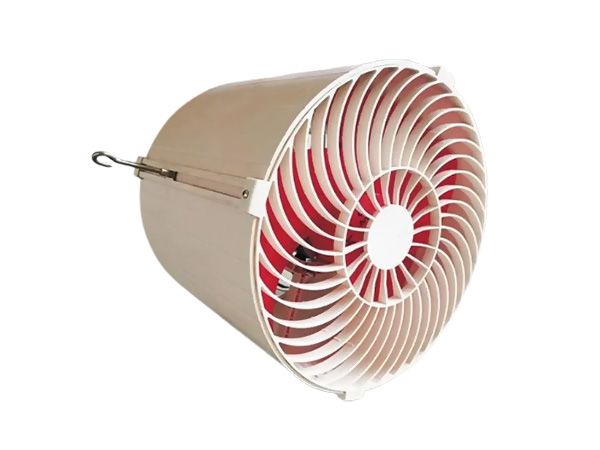
Misting is the primary tool for maintaining humidity in the propagation zone, and the design of the misting system determines whether rooting succeeds or fails. A misting system for propagation is different from a conventional greenhouse fogging system: it needs to apply very fine droplets — typically 50 to 100 microns — frequently enough to keep the leaf surface continuously moist without creating water puddles in the growing medium that would drown the cuttings. The misting cycle is controlled by a timer or, in more sophisticated systems, by a leaf moisture sensor: the system fires for 5 to 10 seconds, followed by a drying interval of 2 to 5 minutes, in a continuous cycle that maintains leaf surface moisture without over-wetting. The misting nozzle must be positioned so that the spray pattern covers the propagation bench evenly — overlapping spray patterns at 50 cm spacing are standard — and the water must be clean enough that the nozzles do not clog. Filtered water or reverse-osmosis water is standard for misting systems to prevent mineral deposits on the nozzles and on the leaf surfaces of the cuttings. Our JC-242 centrifugal humidifier is an effective complement to misting in propagation zones: it maintains ambient humidity between misting cycles and ensures that the air around the cuttings is close to saturation even when the misting system is in its drying interval.
Seedling Trays, Growing Media, and Propagation Benches
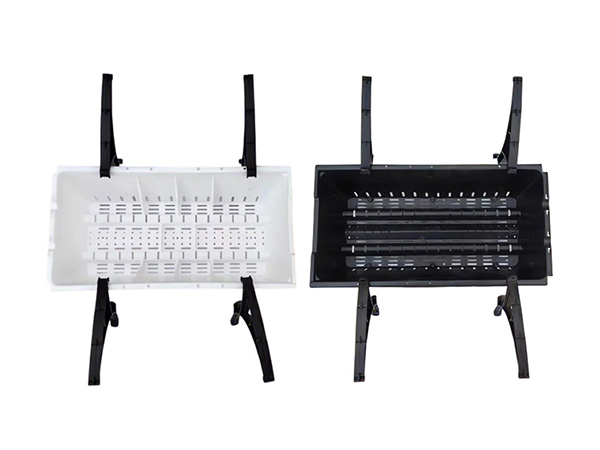
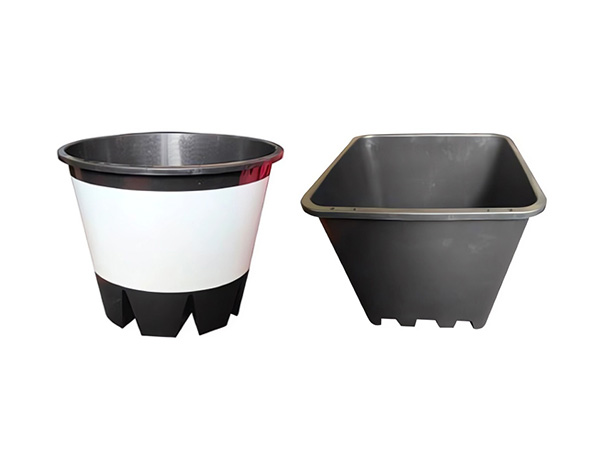
The seedling tray is the growing environment for the plant during its most vulnerable life stage, and the choice of tray, media, and bench system determines how uniformly and how quickly the seedlings or cuttings establish. Seedling trays range from small plug trays with 200 to 500 cells per tray for high-volume vegetable seedling production, to large individual pots for shrub and tree propagation, and the choice of tray size determines how long the seedling can remain in the tray before transplanting: smaller cells mean earlier transplanting and higher tray density, but also faster drying and more stress on the seedling if irrigation is delayed. Growing media for propagation must balance water retention and drainage: it must hold enough moisture to keep the cutting hydrated but drain freely enough to provide the oxygen that the developing roots need. Standard propagation mixes are typically peat-based or coir-based with perlite added for drainage and aeration. Propagation benches should be flat and level — any slope causes uneven water distribution across the tray — and should be designed for easy drainage so that excess water does not accumulate beneath the trays. Wire-mesh bench tops are standard because they allow air circulation beneath the trays, which promotes root development and prevents the bottom of the tray from staying waterlogged.
Rooting Hormones and Cuttings Management
Rooting hormone — typically a synthetic auxin such as indole-3-butyric acid (IBA) or naphthaleneacetic acid (NAA) — is applied to the base of the cutting to stimulate root initiation and increase the percentage of cuttings that root successfully. Rooting hormone is available as a powder, liquid, or gel, and the concentration and formulation depend on the species being propagated: some species root readily without hormone, while others require high concentrations and still root poorly. The hormone is applied to the bottom 1 to 2 cm of the cutting stem immediately before sticking — do not pre-apply and store treated cuttings, as the hormone degrades rapidly. The cutting should be stuck into the growing medium at a depth of 1 to 3 cm, depending on the cutting length and the species, and the medium should be firmly pressed around the cutting base to ensure good contact. After sticking, the cutting should receive a thorough misting to wash any hormone off the leaves (excess hormone on the leaves causes toxicity) and to settle the growing medium around the cutting. The propagation area should then be covered with a clear polyethylene tent or lid to create a high-humidity microclimate that minimizes transpiration stress until the cuttings have callused and begun to produce roots.
Nursery Irrigation: Frequency and Volume for Seedlings
Seedlings and young plants have a small root system in a small volume of growing medium, which means they are far more sensitive to both under- and over-watering than mature plants. The rule for nursery irrigation is little and often: apply small volumes of water at high frequency rather than large volumes infrequently. In practice, this means checking the trays daily — every tray, every bench — and irrigating when the surface of the growing medium is beginning to dry but before the plants show any wilting. In misted propagation zones, hand irrigation supplements the misting system with targeted watering of individual trays that are drying faster than the average. Over-watering is the most common nursery irrigation mistake: it saturates the growing medium, displaces oxygen from the root zone, and creates conditions for Pythium and Phytophthora root rot that can devastate an entire propagation batch within days. Bottom-watering — applying water to the bench surface and allowing the trays to absorb water from below — is an excellent technique for propagation and nursery production because it waters evenly, avoids foliar wetting, and prevents the type of localized over-watering that occurs with overhead irrigation systems.
Hardening Off: Transitioning Seedlings from Nursery to Production
Hardening off is the process of gradually acclimating propagation-zone seedlings to the harsher environment of the production greenhouse — lower humidity, higher light intensity, larger temperature swings, and less frequent irrigation. Plants grown in a fully controlled propagation environment are tender: their cell walls are thin, their cuticles are underdeveloped, and their stomatal control is poor. If they are moved directly from the propagation zone to the production greenhouse, they will wilt, sun-scald, and may die. Hardening off typically takes 7 to 14 days: during the first week, vents are opened gradually to reduce humidity and increase air circulation; during the second week, irrigation frequency is reduced and the plants are exposed to gradually increasing light levels by removing shade cloths or moving them to a brighter part of the greenhouse. The goal is to produce a seedling with thicker cell walls, a more developed cuticle, better stomatal control, and a more extensive root system — in short, a plant that can cope with the variable conditions of the production environment without stress. Skipping or rushing the hardening-off process is a false economy: the time invested in hardening off is recovered many times over in the improved establishment, faster growth, and higher yield of well-hardened plants compared to tender ones.
Related News
-
Greenhouse Curtain Hooks: How to Hang Screens and Partitions Without Rust
A curtain hook hangs shade nets, screens, and partitions cleanly. Learn how the JC-45 one-piece hook is built, where it f...
-
Greenhouse Centrifugal Humidifiers: How to Choose the Right Atomizer for Summer Cooling
Pick the right greenhouse humidifier. See how the JC-242 centrifugal atomizer with top grille controls humidity and summe...
-
Greenhouse Accessories: The Complete Buyer's Guide to Greenhouse Parts and Fittings
A complete buyer's guide to greenhouse accessories: film clamps, coilers, pulleys, hooks, seats, humidifiers, and nipples...
-
Greenhouse Supporting Rollers, Bearing Wheels, and Dragging Wheels Guide
Supporting rollers, bearing wheels, and dragging wheels provide smooth, low-friction support for moving components in com...
-
Greenhouse Roof Drainage and Pipe Fittings: Elbow Connections and Drainage Design
Proper roof drainage keeps greenhouse structures dry and stable. Learn how elbow connections, pipe connectors, and draina...