




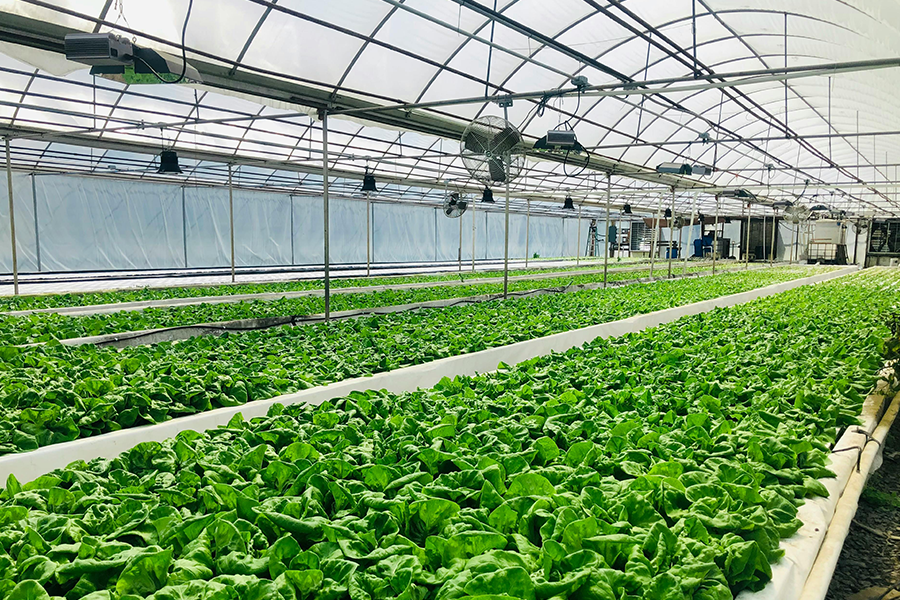

How to Pick the Best Greenhouse Film for Your Climate
Publish Time:2026-07-15 14:10:52 Author:Jucheng Views:169
The same greenhouse film that works perfectly in Kunming's mild climate would be a disaster in Harbin's freezing winters. And a film that keeps a desert greenhouse cool would overheat a humid coastal structure. There is no universal best greenhouse film — but there is a best film for your specific growing conditions. At JC Greenhouse Pro, we do not manufacture film, but we test our film fixation components with every major film type. Here is what we have learned about matching film properties to climate conditions.
Cold Climates (Winter Temperatures Below -10 °C)
If you grow in a region with hard winters, heat retention is your top priority. Standard polyethylene film loses 15-30% of the greenhouse's nighttime heat through infrared radiation escaping through the film. An IR (infrared) barrier film contains additives that reflect this radiation back into the greenhouse. The night temperature inside an IR-film greenhouse is typically 2-3 °C warmer than under standard film — enough to prevent frost damage on borderline nights.
Thickness matters in cold climates: 200-micron film is the minimum for snow-bearing regions. The extra mass provides better insulation and resists tearing under the weight of accumulated snow. For very cold regions, consider double-layer film with an inflation fan — the trapped air between layers adds significant thermal insulation, reducing heat loss by 30-40% compared to single-layer film.
With thicker film, make sure your film fixation components can handle it. A 200-micron double-layer setup at the card slot is substantially thicker than standard 150-micron single film — you may need a 3.2mm spring wire instead of a 2.8mm one to maintain clamping force.
Hot Climates (Summer Temperatures Above 35 °C)
In hot regions, the goal is to reduce heat buildup inside the greenhouse. Look for film with these properties:
Light diffusion (35-70%): Standard clear film lets direct sunlight create harsh shadows and hot spots. Diffused film scatters light, spreading it evenly through the canopy. This reduces leaf temperature by 2-4 °C and prevents sunburn on sensitive crops. The trade-off: slightly lower total light transmission (85-88% vs 90-90% for clear film).
UV-blocking additives: Hot climates have intense UV radiation that degrades film faster. A UV-stabilized film with 6% stabilizer content lasts 4-5 seasons in subtropical conditions. Budget films with 3-4% stabilizer may start cracking in season two.
Ventilation compatibility: In hot climates, your film winders will run daily. Ensure the film you choose is rated for frequent rolling and unrolling — some films develop creases at the winder pipe after repeated cycles. If you use side-vent or roof-vent film winding systems from our winder range, confirm the film's fold resistance with your supplier.
Humid and Coastal Climates
High humidity creates condensation on the inner film surface. Water droplets act as lenses that focus sunlight, causing leaf burn. They also drip onto plants, promoting fungal diseases. Anti-fog (anti-drip) additives are the solution — they reduce the film's surface tension so condensation forms as a continuous water sheet that runs off the film rather than beading into droplets.
Coastal growers face an additional challenge: salt spray and high UV. The combination accelerates film degradation significantly. In coastal installations, we recommend the thickest film your budget allows (200 micron minimum) with maximum UV stabilizer content (6%+). The salt-laden air also affects the fixation hardware — upgrade to stainless steel spring wires and fasteners for coastal greenhouses.
Windy Regions
Wind is hard on greenhouse film. The primary failure mode is abrasion at the point where the film contacts the card slot channel edge. In windy areas, use a channel with wider flanges (18mm minimum) and ensure the flange edges are smooth. Some growers add a thin rubber strip between the film and the channel edge to reduce abrasion — a simple fix that doubles film life at the fixation line.
Film thickness should be 180-200 micron minimum in wind-exposed locations. Thinner film flutters more at the fixation point, accelerating fatigue and tear. Tension the film on a warm day and re-tension after 48 hours — a properly tensioned film moves less in the wind, reducing stress at every fixation point.
Film and Fixation: They Must Work Together
A film that is thicker than the card slot was designed for will not seal properly — the spring wire cannot compress the film sandwich enough to hold it. A film with anti-fog coating has a different surface friction than standard film, which can affect how the spring wire slides against it during installation. Always tell your fixation component supplier what film you plan to use, so they can confirm the spring wire and groove match.
At JC Greenhouse Pro, we have tested our card slot channels and spring wires with film thicknesses from 80 to 250 microns. We provide film fixation systems matched to your film specification. Contact us with your film details and greenhouse dimensions for a recommendation.
References
- GB/T 4455-2019: Polyethylene (PE) Agricultural Film — Chinese National Standard
- Wageningen University & Research: Greenhouse Film Properties and Crop Production
- JC Greenhouse Pro: Film compatibility testing with spring wire fixation — 2025 test report
Related News
-
Greenhouse Supporting Rollers, Bearing Wheels, and Dragging Wheels Guide
Supporting rollers, bearing wheels, and dragging wheels provide smooth, low-friction support for moving components in com...
-
Greenhouse Roof Drainage and Pipe Fittings: Elbow Connections and Drainage Design
Proper roof drainage keeps greenhouse structures dry and stable. Learn how elbow connections, pipe connectors, and draina...
-
Greenhouse Propagation and Nursery Seedling Production: Equipment and Techniques
Propagation and nursery production are the most demanding greenhouse applications for climate control and hardware precis...
-
Greenhouse Irrigation Systems: Drip Watering, Fertigation, and Scheduling Guide
Water is the lifeblood of any greenhouse operation, and the irrigation system that delivers it must be designed for relia...
-
Greenhouse Insect Screen and Screen Door Systems: Wire Tighteners, Gear Racks, and More
Insect screens and screen door systems protect greenhouse crops from pests while maintaining ventilation. Learn how to in...