




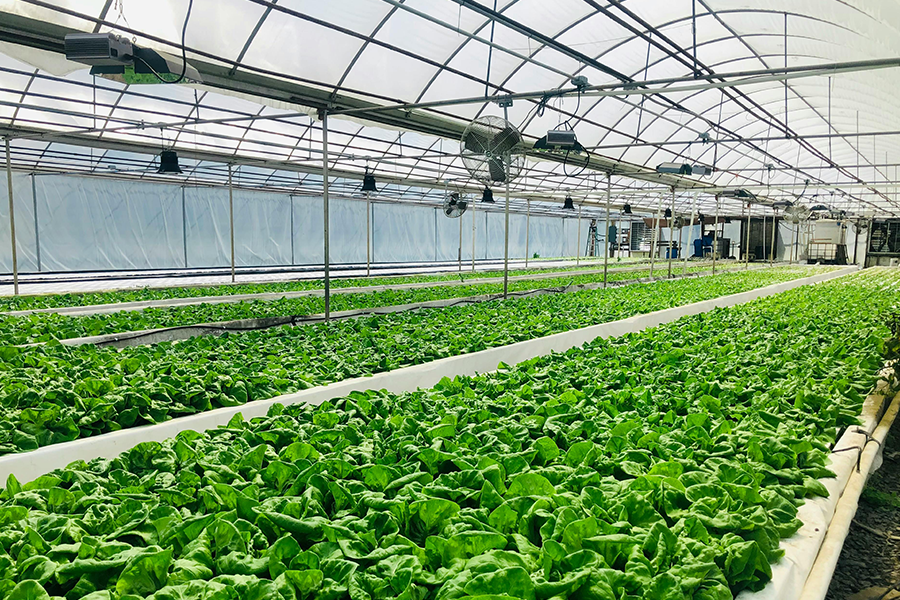

Reliable Greenhouse Accessories Manufacturer Guide for Commercial Growers
Publish Time:2026-10-27 09:09:28 Author:Jucheng Views:189
Introduction
When a commercial grower budgets for a new greenhouse, the structural frame and the covering film usually dominate the spreadsheet. The fittings that hold them together rarely appear as line items worth debating. Yet across the protected cultivation sector, the most common cause of unplanned downtime is not the failure of a main frame member, but of a small accessory that let a film edge lift in a storm.
Every clamp, lock channel, spring wire and anchor transfers load from the covering material into the frame. When that transfer point is weak, the consequences are immediate: torn film, lost climate control, crop loss and emergency repair crews. Choosing a greenhouse accessories manufacturer is therefore a decision about risk management, not about buying the cheapest box of hardware.
This guide sets out the categories that matter, the material standards that separate a durable fitting from a disposable one, and a practical framework for qualifying a greenhouse components supplier before a container is booked.
Why Accessory Quality Decides the Lifespan of a Structure
A greenhouse is a load path. Wind uplift, snow load, thermal movement and the constant pull of a tensioned film all travel through the structure and terminate at the fittings. A frame tube that is correctly galvanised and sized will outlast its covering film by many years, but only if the connection points survive the same environment.
In humid coastal regions and in high-irrigation tunnels, fittings sit in a permanently wet, fertiliser-rich microclimate. Salt, sulphur and nitrate residues accelerate corrosion far beyond what an open-field structure would experience. Growers who specify a corrosion resistant greenhouse fitting at the design stage routinely report service lives of 15 to 20 years, while those who accept uncoated or electro-galvanised parts often replace them within three seasons.
Core Categories of Greenhouse Accessories
A professional catalogue of commercial greenhouse parts is best understood in four functional groups. Each group has its own specification logic, and mixing quality levels between groups usually shifts the failure point rather than removing it.
Structural supports - hot-dip galvanized posts, purlins, arch tubes, trusses and base plates that carry dead load and environmental load.
Film fixation products - lock channels, wiggle wire, film clips, edge protectors and tensioning lines that secure poly film, shade cloth and insect netting.
Frame connectors - cross clamps, U clamps, purlin clips, ridge connectors and saddle clamps that join tubes without welding.
Foundation and site hardware - ground anchors, base plates, guy wire hardware and gutter components that tie the structure to the ground and manage water.
Material and Coating Standards to Specify
Two variables decide whether a fitting lasts: the base steel grade and the zinc coating mass. Hot-dip galvanizing metallurgically bonds zinc to steel, producing a coating that is sacrificial - it corrodes in place of the substrate even when the surface is scratched during installation. Electro-galvanized or painted parts offer only a barrier film and fail quickly once that film is breached.
| Component | Recommended material | Typical specification | Expected service life |
|---|---|---|---|
| Main frame tube | Hot-dip galvanized steel | 60-275 g/m2 zinc coating | 15-20 years |
| Film lock channel | Galvanized steel or aluminium alloy | 0.7-1.0 mm thickness, 30 x 11 mm | 10-15 years |
| Wiggle wire | Galvanized or black steel wire | 2.0-2.3 mm, full plastic coating | 8-12 years |
| Frame clamp | Hot-dip galvanized pressed steel | 1.2-2.0 mm thickness | 12-18 years |
| Ground anchor | Hot-dip galvanized steel | Shaft 16-25 mm, helix 150-250 mm | 15-20 years |
The Real Cost of a Failed Fitting
The savings from a cheaper clamp are usually a fraction of a cent per unit of production area. The cost of a failure is not. A single lifted film edge in a windy season can destroy a covering, expose a crop to cold shock, and require a repair crew during the worst possible weather window.
A more useful way to compare quotations is cost per service year rather than cost per piece. A hot-dip galvanized greenhouse fitting priced 30 percent above a painted alternative but lasting four times longer is the cheaper component on any realistic discount rate. This is the trade-off that experienced procurement managers apply, and it is the reason commodity hardware rarely survives in professional horticulture.
A Framework for Evaluating a Greenhouse Components Supplier
Before committing to volume, qualified buyers typically run the same six checks. The answers separate a factory with process control from a trading desk reselling whatever is available.
Confirm the coating process - ask whether galvanizing is hot-dip or electrolytic and request the target coating mass in grams per square metre.
Verify dimensional consistency - lock channels and clamps must match the tube diameter and film build-up specified; a 1 mm deviation can prevent a spring wire from seating.
Request sample assemblies - a single piece proves little; ask for a channel, matching wire and clip assembled and tensioned as they would be on site.
Check customisation capability - projects rarely fit a standard catalogue; a manufacturer able to cut lengths, punch holes and produce bespoke profiles reduces site labour.
Review inspection practice - coating thickness checks, salt-spray testing and batch traceability indicate whether quality is measured or assumed.
Assess packing for export - bundled, wrapped and palletised loads arrive intact; loose pieces arrive bent and are rejected at installation.
Installation and Maintenance Practices That Extend Service Life
Even the best accessory underperforms when installed carelessly. Tension film evenly so that load is distributed along the channel rather than concentrated at corners. Avoid over-tightening clamps onto galvanized tube, which can crack the zinc layer and create the very corrosion site the coating was meant to prevent.
Schedule a seasonal inspection of connection points, particularly after the first winter and after any storm above design wind speed. Replacing a worn spring wire or a rusted clamp during a routine walk-through costs minutes; replacing it after a film failure costs a crop.
Conclusion
The performance of a protected cultivation facility is decided at its smallest components. Growers who treat greenhouse hardware sourcing as a technical specification exercise - material, coating mass, dimensional fit and supplier process control - build structures that survive weather cycles instead of reacting to them.
For projects where standard catalogue parts do not fit the span, height or covering build-up, working with a manufacturer that offers customized greenhouse parts alongside its standard range is the most reliable way to keep both the structure and the schedule intact.
Related News
-
Customized Greenhouse Parts: A Practical Guide to OEM Structural Components
A buyer's guide to customized greenhouse parts and OEM components: when a standard catalogue stops fitting, what informat...
-
Reliable Greenhouse Accessories Manufacturer Guide for Commercial Growers
A practical guide for commercial growers on how to evaluate a greenhouse accessories manufacturer, covering material grad...
-
Greenhouse Single Pulleys: How to Choose a Reliable Pulley for Hanging and Lifting
A single pulley lifts and redirects loads in a greenhouse. Learn how the single pulley is built, where it fits, and how t...
-
Greenhouse Reversing Wheels: How a Small Part Keeps Side Film Winding Reliable
A reversing wheel redirects film-winding force so your side coiler works smoothly. Learn how the reversing wheel is built...
-
Greenhouse Pipe Seats: How to Anchor Film Roll Pipes Without Drilling the Frame
A pipe seat anchors film roll and structural pipes without welding or drilling. Learn how the JC-202 pipe seat is built, ...