





Customized Greenhouse Parts: A Practical Guide to OEM Structural Components
Publish Time:2026-10-27 09:22:37 Author:Jucheng Views:97
Introduction
Standard greenhouse hardware covers most of the market, and it should - catalogue parts are cheaper, faster to ship and proven in the field. But a significant share of projects depart from the standard: a non-metric tube size inherited from an existing structure, a span that exceeds the catalogue range, a covering build-up that no stock channel will accept.
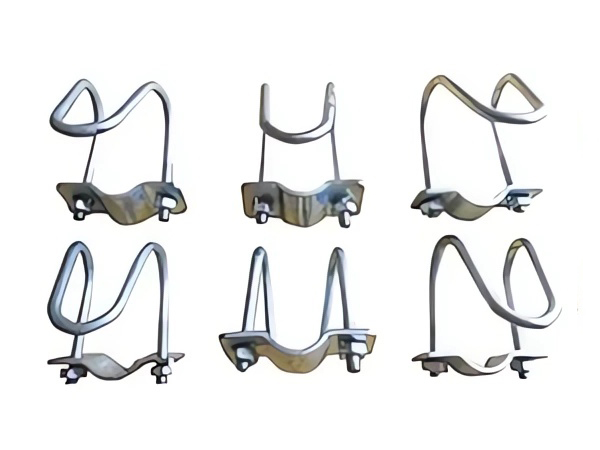
In those situations the choice is between forcing a standard part to fit and commissioning a customized greenhouse part. The first option rarely ends well, because a fitting that is almost correct transfers load differently from the one that was designed for the joint.
This guide explains when customisation is justified, what a factory needs in order to quote, and how to control quality on a bespoke run of OEM greenhouse components.
When a Standard Component Stops Being Standard
Four situations account for most custom orders. Recognising them early avoids the costly pattern of discovering incompatibility on site, after the covering has been delivered and the installation crew is standing by.
Non-standard tube diameter or profile - regional tube sizes and oval tube sections do not match catalogue clamp bores.
Span, height or load beyond the catalogue range - larger sections or reinforced connection plates are required.
Unusual covering build-up - film plus netting plus shade cloth exceeds standard channel capacity.
Extension of an existing structure - new components must match hardware installed years earlier, often by another supplier.
Information Needed for an Accurate Quotation
A bespoke quotation is only as reliable as the information behind it. Vague enquiries produce optimistic prices followed by revisions; complete enquiries produce a price and a sample. The following package is what a competent manufacturer expects.
| Item | What to provide | Why it matters |
|---|---|---|
| Drawing or sample | Dimensioned drawing, or two physical samples | Defines geometry without interpretation |
| Material and coating | Steel grade, hot-dip coating mass, or aluminium alloy | Drives cost, tooling and corrosion performance |
| Quantity and schedule | First order volume and repeat expectation | Determines whether tooling investment is justified |
| Assembly context | Mating tube size, film build-up, fixing method | Prevents dimensional mismatch at the joint |
| Packing and marking | Bundle size, labelling, pallet requirement | Affects landed condition and site handling |
Tooling, Tolerances and Repeatability
Pressed clamps and roll-formed profiles are made with dedicated tooling. For a bespoke profile, tooling cost is the main barrier to entry, and it is amortised over the order. This is why manufacturers ask about repeat volume: a one-off run can be produced, but the unit price reflects the tooling rather than the material.
Tolerances deserve equal attention. A bespoke greenhouse fitting must seat with the mating component every time, and the practical way to confirm that is a sample assembly under real tension. Agree in writing which dimensions are critical - usually bore diameter, grip width and slot geometry - and allow wider tolerance elsewhere to keep cost down.
Material and Coating Choices on Bespoke Runs
Customised does not mean compromised. The coating standard applied to catalogue parts should apply equally to bespoke ones, and hot-dip galvanizing after fabrication remains the reference for structural fittings.
One trap is worth noting: components that are cut, punched or welded after galvanizing lose protection at those points. Where post-fabrication work is unavoidable, specify either galvanizing after all forming operations or a zinc-rich repair treatment applied to every cut edge before packing.
Quality Control Before Shipment
On a bespoke run, the risk concentrates in the first articles and in the last-minute substitutions. A disciplined acceptance process is short but specific.
First article approval - inspect and test a production sample from actual tooling, not a hand-made prototype.
Coating verification - confirm coating mass on the finished part, particularly at corners and cut ends.
Fit test - assemble the part with the actual tube and covering build-up it will be used with.
Batch consistency - check dimensional variation across a random sample from the middle of the run, not only from the top of the pallet.
Working With a Manufacturer Rather Than a Reseller
Bespoke work requires decisions at process level: which mill supplies the strip, what the roll former can hold, whether coating is applied before or after punching. A trading company must relay each of those questions; a manufacturer answers them directly and can propose an alternative that meets the same requirement at lower cost.
For distributors, this also protects brand. A custom greenhouse hardware line produced under consistent process control can be supplied repeatedly to the same specification, which is what allows a catalogue to be published with confidence.
Conclusion
Customisation is justified whenever a standard part would compromise the load path, the coating or the fit. Done properly - with a complete information package, first-article approval and a coating specification no weaker than the catalogue standard - customized greenhouse parts remove the site improvisation that causes most long-term problems.
The most efficient projects treat customisation as a specification exercise rather than an emergency purchase, engaging the manufacturer while the structure is still on the drawing board.
Related News
-
Customized Greenhouse Parts: A Practical Guide to OEM Structural Components
A buyer's guide to customized greenhouse parts and OEM components: when a standard catalogue stops fitting, what informat...
-
Reliable Greenhouse Accessories Manufacturer Guide for Commercial Growers
A practical guide for commercial growers on how to evaluate a greenhouse accessories manufacturer, covering material grad...
-
Greenhouse Single Pulleys: How to Choose a Reliable Pulley for Hanging and Lifting
A single pulley lifts and redirects loads in a greenhouse. Learn how the single pulley is built, where it fits, and how t...
-
Greenhouse Reversing Wheels: How a Small Part Keeps Side Film Winding Reliable
A reversing wheel redirects film-winding force so your side coiler works smoothly. Learn how the reversing wheel is built...
-
Greenhouse Pipe Seats: How to Anchor Film Roll Pipes Without Drilling the Frame
A pipe seat anchors film roll and structural pipes without welding or drilling. Learn how the JC-202 pipe seat is built, ...