





Greenhouse Climate Control: Temperature, Humidity, CO2, and Automated Ventilation
Publish Time:2026-08-28 17:48:06 Author:Jucheng Views:108
A greenhouse is a solar-powered factory that grows plants, and the climate inside that factory — the temperature, humidity, CO2 level, and air movement — determines how efficiently it operates. Plants are biological machines that respond to their environment with extraordinary sensitivity: a 1°C change in average temperature can shift a tomato's fruit maturation rate by several days; a 10 percent change in relative humidity can mean the difference between healthy, turgid plants and a Botrytis outbreak that destroys half the crop; and a CO2 concentration of 800 parts per million compared to ambient 400 ppm can increase photosynthetic rate by 30 percent and cut production time proportionally. Managing these four climate variables — temperature, humidity, CO2, and air movement — and integrating them into a coherent climate strategy is what separates high-performing greenhouses from average ones. In this guide, we explain the interactions between these variables, the hardware that manages them, and the strategies that experienced growers use to maintain the optimum growing environment year-round.
Temperature: The Primary Climate Variable
Temperature is the primary climate variable because it drives both plant growth rate and the demand for all other climate interventions — heating, cooling, ventilation, and humidity control. Every crop has an optimal temperature range: for most vegetables, this is 18 to 25°C during the day and 15 to 20°C at night. Above this range, photosynthesis slows, respiration accelerates, and the plant burns energy faster than it produces it; below this range, growth rate drops and cold-sensitive crops suffer damage. The key management decision for temperature is the day-night differential, called the DIF: most crops benefit from a slightly lower night temperature than day temperature, which mimics natural diurnal cycling and supports healthy development. In heated greenhouses, maintaining this differential requires a heating system that can respond quickly when night temperature drops and shut off cleanly when solar gain raises temperature during the day. Without this responsive control, the choice is between a night temperature that is safe (warm enough) and a day temperature that is not too high (cool enough) — a compromise that always sacrifices some growth potential.
Ventilation as the First Line of Climate Control
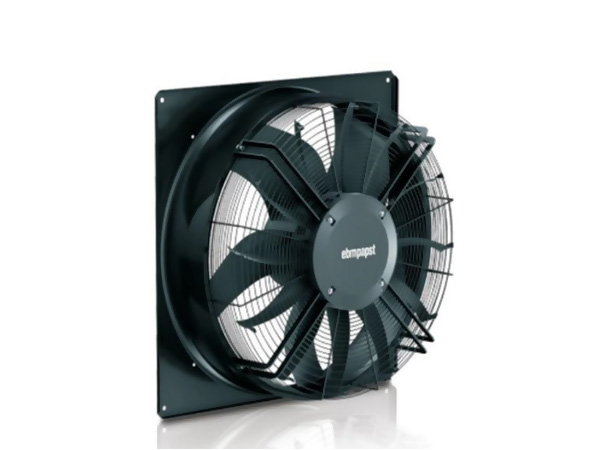
Ventilation — both natural through roll-up film, ridge vents, and sidewall vents, and forced through axial flow fans — is the primary tool for managing temperature, humidity, and CO2 simultaneously. Before any mechanical heating or cooling system is activated, ventilation is always the first response, because it is free, requires no energy input, and handles all three variables at once. Opening the vents to let hot air escape and bring in cooler outside air reduces temperature, reduces humidity by diluting the moist inside air with drier outside air, and replenishes CO2 that the plants have consumed during photosynthesis. The challenge is that ventilation also has trade-offs: opening vents in cold weather loses heat; opening vents in dry weather accelerates moisture loss from the crop and growing medium; and opening vents in low-CO2 conditions brings in air with ambient CO2, which may be below the optimum level for maximum photosynthesis. A well-designed climate control strategy defines the ventilation setpoints for each of these conditions and integrates them into a priority hierarchy that makes the right decision automatically.
Humidity Control: The Overlooked Variable
Relative humidity — the amount of moisture in the air relative to the maximum it can hold at that temperature — is the most commonly neglected climate variable in greenhouse management, yet it is one of the most impactful for crop health and system efficiency. The target range for most greenhouse crops is 60 to 80 percent relative humidity: below 60 percent, plants lose water faster through transpiration than their roots can supply it, causing stress and wilting; above 80 percent, the air is close to saturation, which slows transpiration, promotes fungal diseases like Botrytis and downy mildew, and creates condensation on plant surfaces and structures that further accelerates disease. Managing humidity in a greenhouse is fundamentally a ventilation problem: the only way to lower humidity is to remove moist air and bring in drier air from outside. This is why roll-up film ventilation is so effective for humidity management in moderate climates — a few minutes of ventilation at sunrise, when humidity is typically highest and temperature is still acceptable, can bring humidity down dramatically with minimal temperature impact. In humid tropical climates or in winter when outside air is cold and dry, mechanical dehumidification may be needed, but it is expensive and energy-intensive compared to ventilation.
CO2 Enrichment: The Hidden Yield Driver
Carbon dioxide is the raw material for photosynthesis, and elevating the CO2 concentration inside the greenhouse above ambient outdoor levels is one of the most effective ways to increase crop productivity — but it is also one of the most commonly neglected climate management tools. The atmosphere contains approximately 400 ppm CO2, and plants growing at this level are CO2-limited during the middle of a sunny day when photosynthesis is running at maximum rate. Enriching the greenhouse air to 700 to 1,000 ppm CO2 — a level that is still safe for workers — can increase photosynthetic rate by 20 to 40 percent, which translates directly into faster growth, earlier maturity, and higher yield. CO2 enrichment is typically achieved by burning natural gas, propane, or liquid petroleum gas in a CO2 generator, or by recovering CO2 from a boiler flue gas stream that is already producing heat for the greenhouse. The critical rule for CO2 enrichment is that vents must be closed when enrichment is active: adding CO2 while ventilation is open simply vents it outside and wastes fuel. This means CO2 enrichment is most effective during the morning, before the greenhouse heats up enough to require ventilation, and in winter when heating vents are already closed for energy conservation.
Air Movement and Circulation for Uniform Climate
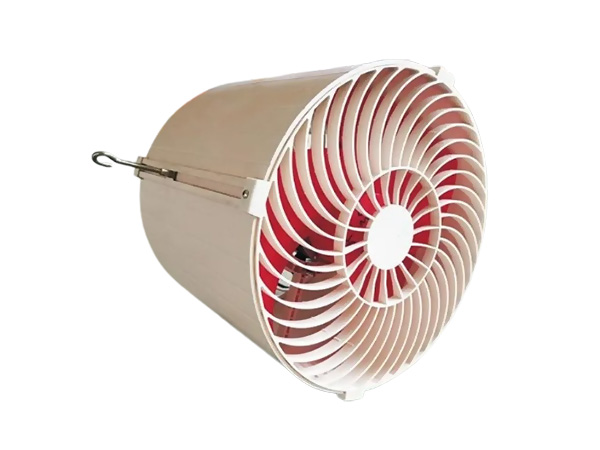
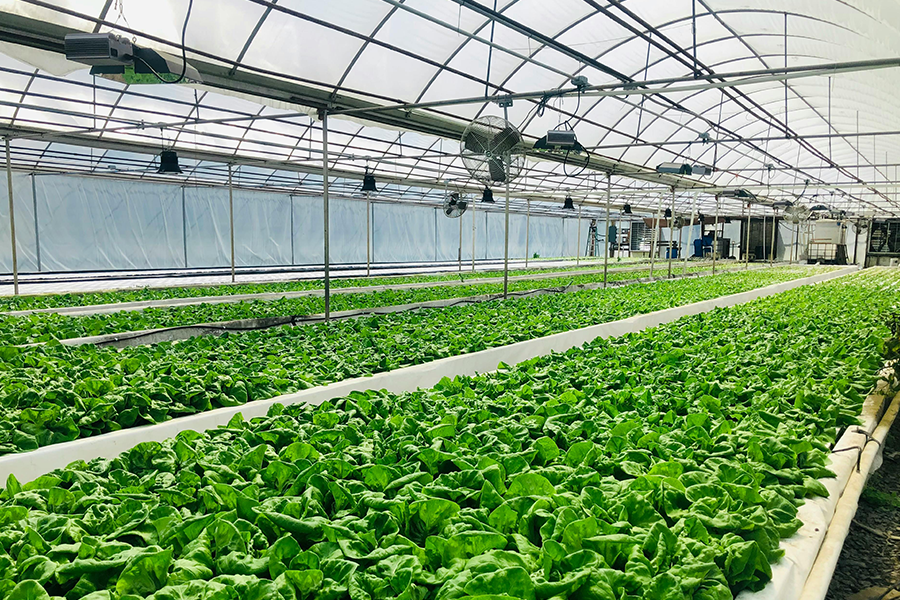
Air movement within the greenhouse is not the same as ventilation, and it is just as important for crop quality. Without circulation, air stratifies: warm, moist air rises to the apex of the greenhouse while cool, dry air sinks to the floor, creating vertical temperature gradients of 5 to 10°C that cause uneven crop growth. Circulation fans — as described in our ventilation guide — create gentle horizontal air movement that breaks up these stratification layers, maintains uniform temperature and humidity throughout the growing area, and provides the gentle air movement that stimulates gas exchange at the leaf surface and strengthens plant stems. The target for circulation is a gentle air movement of 0.5 to 1.0 meters per second — enough to rustle leaves slightly but not so strong that it causes wind stress or dries the crop excessively. In multi-bay greenhouses, circulation fans should be arranged so that adjacent fans blow in opposite directions, creating a rolling circulation pattern that covers the full growing area without creating dead zones. And during CO2 enrichment, circulation fans are essential for distributing the enriched air throughout the greenhouse so that all plants benefit equally from the elevated CO2 level.
Building an Integrated Climate Management Strategy
The climate variables in a greenhouse do not exist in isolation — they interact constantly, and managing them as independent systems leads to conflict, waste, and poor outcomes. An integrated climate management strategy starts with the crop's requirements and works backward to the system settings: define the target temperature, humidity, and CO2 range for the crop; define the ventilation strategy that achieves those targets with minimum energy input; define the heating and cooling interventions needed when ventilation alone cannot maintain the targets; and define the priority hierarchy that resolves conflicts when one intervention helps one variable but harms another. The most effective greenhouse climate managers — both human operators and automated controllers — use this priority-based approach: ventilation is the first response for temperature and humidity; CO2 enrichment is added when vents are closed and temperature is in range; heating and mechanical cooling are used only when ventilation cannot achieve the targets; and circulation runs continuously to maintain uniformity. With this framework in place, even a basic climate control system can achieve results that rival much more sophisticated and expensive installations.
Related News
-
Greenhouse Climate Control: Temperature, Humidity, CO2, and Automated Ventilation
Climate control is the foundation of greenhouse productivity. Learn how temperature, humidity, CO2, and ventilation inter...
-
Greenhouse Film Clips and Hardware Accessories: Clamps, Holders, and Driver Cards
Film clips, cable holders, and driver cards complete every professional greenhouse installation. Learn how horizontal cla...
-
Wire Winding Drums and Coated Steel Cables for Greenhouse: Selection Guide
Wire winding drums and coated steel cables are essential hardware for managing cables in commercial greenhouses. Learn ho...
-
Spring Wire and Film Clamp Systems for Greenhouse Covering: Complete Guide
Spring wire and film clamp systems are the essential hardware for securing greenhouse covering film. Learn how spring wir...
-
Manual Film Coiler Systems for Greenhouse: Selection and Installation Guide
A manual film coiler makes greenhouse film installation and seasonal replacement fast and safe. Learn how roll-up film sy...