




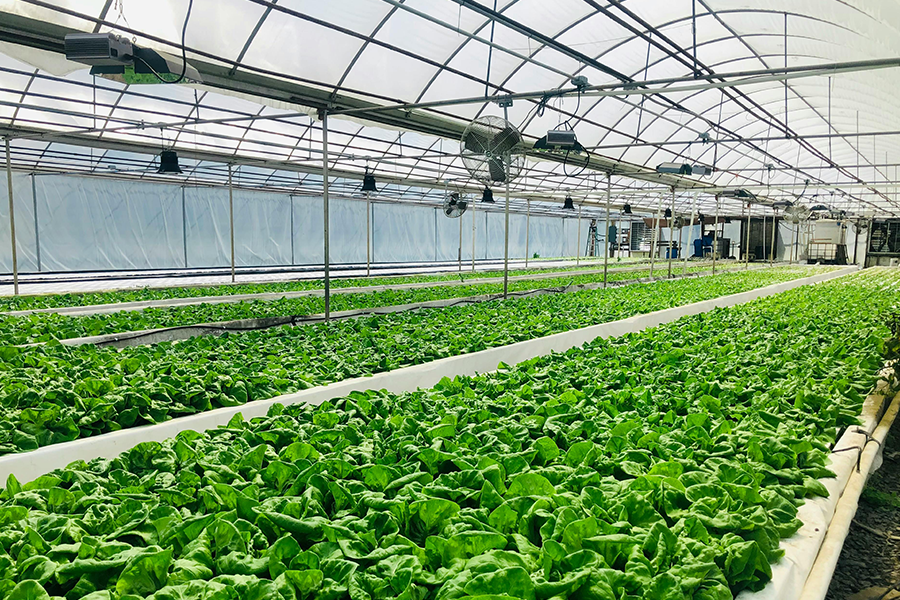

Agricultural Film Fixation Solutions with Greenhouse Film Lock Channel
Publish Time:2026-10-31 09:40:30 Author:Jucheng Views:174
Introduction
Of all the components in a film greenhouse, the one that decides whether the covering survives its first storm is usually the least discussed. The greenhouse film lock channel - a narrow formed profile fixed to the frame - holds the film edge, and together with a spring wire it forms a self-locking joint that resists uplift without puncturing the covering.
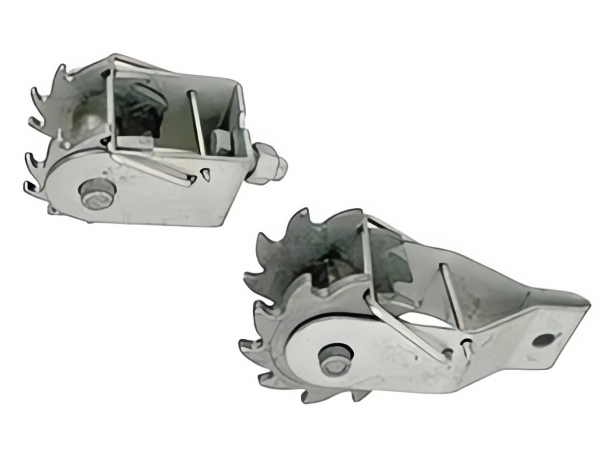
The appeal of the system is that it solves two conflicting requirements. A film must be held firmly enough to resist wind, yet it must be released quickly for seasonal replacement or repair. Bolting or nailing a film satisfies neither. A film lock profile satisfies both, and it does so with a component that costs very little relative to the covering it protects.
This guide explains the geometry that makes the joint work, the specifications to demand, and the installation details that determine whether the system performs at its rated wind resistance.
How the Lock Channel System Works
The channel is a single U or C section, typically around 30 mm wide and 11 mm deep, fixed to the frame tube with screws or rivets. The film is laid over the channel mouth and a pre-formed zigzag spring wire - often called wiggle wire - is pressed into the groove. The wire's wave shape forces the film down into the channel and holds it under continuous spring pressure.
Because the wire grips along the entire channel length rather than at discrete points, load is distributed evenly along the film edge. There are no perforations, no point stresses, and no fasteners to work loose. This is why the greenhouse film locking system performs so much better under cyclic wind loading than clip or staple alternatives: the joint tightens rather than loosens as the film pulls.
Dimensions and Materials to Specify
Channel performance follows from thickness, material and coating. A thin channel flexes under spring pressure and the wire can walk out of the groove; a correctly gauged channel holds its geometry through repeated film changes.
| Type | Material | Thickness | Typical size | Standard length |
|---|---|---|---|---|
| Galvanized lock channel | Hot-dip galvanized steel | 0.7 mm | 30 x 11 mm | 3 m / 4 m / 6 m |
| Galvanized lock channel | Hot-dip galvanized steel | 0.9 mm | 30 x 11 mm | 3 m / 4 m / 6 m |
| Aluminium lock channel | Aluminium alloy | 1.0 mm | 28 mm width | 3 m / 4 m / 6 m |
| Aluminium lock channel | Aluminium alloy | 1.2-1.5 mm | 30-33 mm width | 3 m / 4 m / 6 m |
Matching the Channel to the Covering Build-Up
A frequent specification error is sizing the channel for a single layer when the design calls for two. A film plus an insect net, or a film plus a shade cloth, occupies more groove volume. The channel depth must accommodate the thickest build-up the greenhouse will ever carry, even if it is installed in stages.
Where multiple layers are planned, the deeper 11 mm groove is the safer choice, and a heavier-gauge spring wire should be specified to maintain grip. Growers who fit the thinnest available channel to save cost typically discover the limitation at the first netting installation, when the second layer refuses to seat.
Wind Resistance and Why Geometry Governs It
Wind does not lift a film uniformly. It creates suction peaks at the ridge, at corners and at the windward eave, and it is these local peaks that initiate failure. A properly seated lock channel with the correct spring wire is routinely rated to withstand storms well above the speeds that damage conventionally fastened film, because the joint converts a peeling force into a clamping force.
Three installation variables decide whether that rating is achieved on site:
Fixing pitch - the channel must be fastened to the frame closely enough that it cannot bow between fixings under spring tension.
Wire seating - the spring wire must be fully pressed into the groove; a partially seated wire releases progressively under load.
Corner detailing - corners and ridge transitions need continuous channel or a properly mitred joint; a gap at a corner is where uplift starts.
Installation Sequence That Avoids Rework
Fit the channel to the frame first, along clean, straight lines, using fasteners compatible with the galvanized surface. Lay the film with enough slack to reach the groove without tension, then seat the wire from one end, working along the run rather than jumping between sections. Trim the film outside the channel only after the wire is fully seated.
Where the same channel carries a shade cloth or insect net in summer, install those layers with the film so the groove is loaded once and evenly, rather than re-tensioning an already seated wire at a later date.
Inspection and Seasonal Handling
Inspect channel fixings and wire tension at the start of each wind season, and after any storm above design speed. A wire that has walked out of its groove is visible from the ground as a raised film edge - a five-minute correction that prevents a far larger failure.
At film replacement, check the channel for crevice corrosion under the fixing heads and for deformation at corners. A channel that has held its geometry through one film cycle will usually serve several more; one that has bowed should be replaced with the covering, since its grip can no longer be trusted.
Conclusion
The greenhouse film lock channel is a small component with an outsized influence on covering performance. Specified at the right gauge and depth, matched to the full covering build-up, and installed with attention to fixing pitch and corner continuity, it turns the weakest edge of the structure into one of its most reliable joints.
For projects using non-standard tube diameters or unusual build-ups, a galvanized lock channel produced to project dimensions avoids the compromises that arise when a catalogue profile is forced to fit.
Related News
-
Agricultural Film Fixation Solutions with Greenhouse Film Lock Channel
A technical guide to the greenhouse film lock channel: how the profile and spring wire lock poly film in place, which thi...
-
High Performance Hot-Dip Galvanized Greenhouse Structural Supports Guide
This guide explains how hot-dip galvanized structural supports carry wind and snow loads in a greenhouse, what zinc coati...
-
Customized Greenhouse Parts: A Practical Guide to OEM Structural Components
A buyer's guide to customized greenhouse parts and OEM components: when a standard catalogue stops fitting, what informat...
-
Reliable Greenhouse Accessories Manufacturer Guide for Commercial Growers
A practical guide for commercial growers on how to evaluate a greenhouse accessories manufacturer, covering material grad...
-
Greenhouse Single Pulleys: How to Choose a Reliable Pulley for Hanging and Lifting
A single pulley lifts and redirects loads in a greenhouse. Learn how the single pulley is built, where it fits, and how t...