





Greenhouse Wiggle Wire and Zigzag Spring Wire for Reliable Film Locking
Publish Time:2026-11-02 10:30:39 Author:Jucheng Views:164
Introduction
In a lock channel film system, the channel gets the attention and the wire does the work. The pre-formed greenhouse wiggle wire - also sold as zigzag spring wire or lock spring - is what converts a loose film edge into a clamped joint, and it is the component most often substituted with an inappropriate alternative when a project runs short.
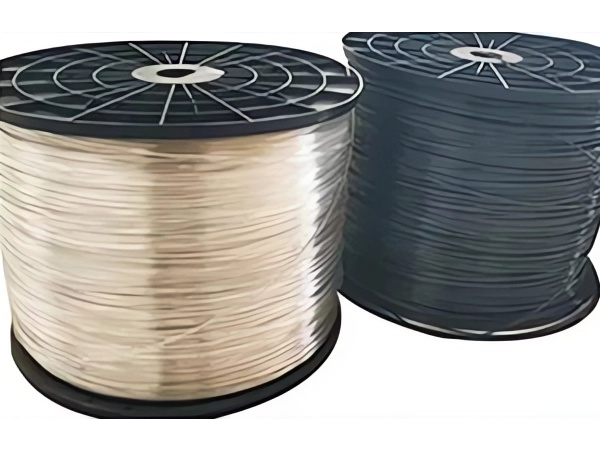
Because the wire is cheap, its specification is frequently decided by price rather than by the spring force and coating required. That is a false economy. A wire with insufficient spring pressure or a breached plastic coating is the most common single cause of film edge release in commercial tunnels.
This guide sets out what to specify in a greenhouse film lock spring, how it interacts with the channel, and how to keep it performing across several film cycles.
What the Spring Wire Does Inside the Channel
The wire is formed into a continuous wave. When pressed into the channel, each wave crest bears against the channel wall while each trough presses the film against the opposite side. The result is a distributed clamping force along the entire run, generated purely by the elastic deflection of the wire.
This is why the wire and channel must be specified as a pair. A wire that is too thin for the groove deflects without generating force and can be pulled out by hand; a wire that is too thick for the groove cannot be seated fully and sits proud, leaving the film loosely held. Correct pairing produces a joint that tightens as the film pulls - the defining behaviour of a self-locking film fixing wire system.
Diameter, Material and Coating Options
Two diameters dominate professional installations, and the choice between them follows from the covering build-up and the design wind speed rather than from habit.
| Specification | Wire type | Diameter | Coating | Typical use |
|---|---|---|---|---|
| Standard single film | Black steel wire | 2.0 mm | Full plastic coating | Light tunnels, inner partitions |
| Standard commercial film | Black steel wire | 2.3 mm | Full plastic coating | Vegetable tunnels, side walls |
| Humid or heated house | Galvanized steel wire | 2.3 mm | Full plastic coating | Multi-span, high condensation |
| Film plus netting | Galvanized steel wire | 2.3 mm | Full plastic coating, heavier gauge | Vent openings, double layer |
Why the Plastic Coating Matters More Than It Appears
A plastic coated locking wire is not finished for appearance. The coating performs three functions that directly affect service life. It prevents metal-to-film contact that would abrade the covering as it moves under wind load, it isolates the wire from the wet, fertiliser-laden environment inside the channel, and it increases friction so the wire resists the slow walk-out caused by cyclic loading.
The coating must be continuous, not applied only at contact points. Wires with partial or end-only coating leave the buried length of the wire exposed to the wettest part of the assembly - precisely where corrosion is fastest and least visible.
Compatibility With Channel Types
A zigzag spring wire should always be sourced against the channel it will be used with, and the practical check is simple and worth performing before ordering at volume.
Seat a sample - press a length into the channel with the intended build-up; it should enter with firm hand pressure and sit flush with the channel mouth.
Check reusability - a correctly specified wire can be removed and re-seated several times without losing spring force.
Match the length - standard wire is supplied around 1.8 to 2 m; overlapping consecutive lengths by several waves avoids gaps at joints.
Verify coating colour stability - black, green and blue coatings are common; choose the colour that best tolerates the site's UV load and matches the covering.
Preventing the Two Common Failure Modes
The first failure mode is walk-out, where vibration and cyclic wind loading gradually push the wire out of the groove. It is prevented by correct spring force, correct seating depth and continuous runs rather than short pieces. The second is hidden corrosion, where a breached coating allows the buried section of wire to rust until it snaps during a film change.
Both are addressed by specification and inspection. Choose galvanized core wire with full plastic coating in humid or heated houses, seat wires fully at installation, and re-inspect tension at the start of each season. Replacing a suspect wire is inexpensive; replacing a released film edge during a storm is not.
Handling, Storage and Reuse
Store wire in its original coils, out of direct sunlight, and avoid kinking lengths during handling - a flattened wave will not generate spring force. At film change, remove wires in continuous runs where possible and inspect each length for coating cracks at the wave crests, where flexing is greatest.
Wires that remain elastic and uncorroded can be reused across several film cycles. Those showing crest cracking or surface rust should be replaced with the covering, since their failure would occur inside a joint that is not visible from the ground.
Conclusion
The greenhouse wiggle wire is the active element in a film locking system; the channel is only its track. Specifying the correct diameter, core material and continuous plastic coating, and confirming compatibility with the channel before ordering, delivers a joint that resists wind, survives condensation and can be re-seated through multiple covering cycles.
Where a project combines film with netting or uses a non-standard groove, sourcing wire and channel from the same manufacturing source removes the dimensional guesswork that causes most seating failures.
Related News
-
Greenhouse Wiggle Wire and Zigzag Spring Wire for Reliable Film Locking
This guide covers greenhouse wiggle wire and zigzag spring wire: wire diameter and coating options, how spring pressure s...
-
Agricultural Film Fixation Solutions with Greenhouse Film Lock Channel
A technical guide to the greenhouse film lock channel: how the profile and spring wire lock poly film in place, which thi...
-
High Performance Hot-Dip Galvanized Greenhouse Structural Supports Guide
This guide explains how hot-dip galvanized structural supports carry wind and snow loads in a greenhouse, what zinc coati...
-
Customized Greenhouse Parts: A Practical Guide to OEM Structural Components
A buyer's guide to customized greenhouse parts and OEM components: when a standard catalogue stops fitting, what informat...
-
Reliable Greenhouse Accessories Manufacturer Guide for Commercial Growers
A practical guide for commercial growers on how to evaluate a greenhouse accessories manufacturer, covering material grad...